
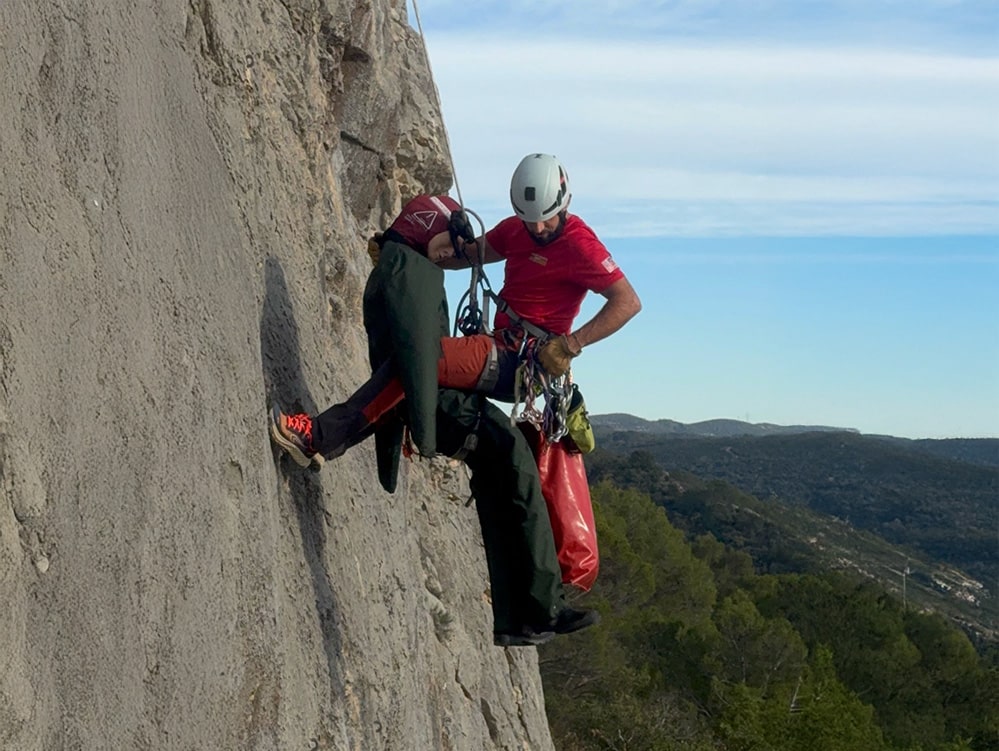
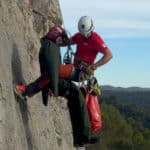
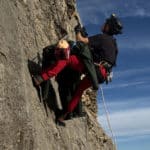
Climbing and rescue training often push participants to their limits, but safety remains paramount. Inspired by a recent LinkedIn post from John Joiris, we’re highlighting how members of the CSA Montagne sports club carried out a test session using our Working at Height Manikin, on loan from our French distributors Hydrotop Secours, to practice self-rescue manoeuvres on cliffs. Read John’s original post here.
Anticipating Risks to Improve Safety
The exercise was designed around a simple principle: anticipate potential challenges to react effectively in real situations. As John explains, “who can do more, can do less” – a mindset that reinforces safety while encouraging practical skills development.
It’s important to note that this session was conducted in a non-professional setting. The participants are sports club members, not professional rescuers, and the training did not involve real emergency intervention. The aim was purely educational, providing a safe environment for supervisors to practice and refine techniques.
Challenges in Training with Traditional Dummies
During typical stall or reeving exercises on cliffs, trainers face a dilemma:
- Human risk: Suspending a volunteer can expose them to harness hang syndrome – a serious condition caused by prolonged suspension in a harness. Even a few minutes can lead to discomfort or circulation issues.
- Lack of realism: Standard training dummies are often too soft, sagging under their own weight, or sometimes too stiff – both distorting the way harnesses fit and providing a very unrealistic experience for the rescuer.
A Technical Solution
The Ruth Lee Working at Height Manikin bridges this gap.
It is designed to provide extra rigidity and reduce slumping in rescue harnesses, making training safer and more realistic. Its hybrid construction (rigid foam with internal reinforcements) ensures a proper “sitting” fit, unlike standard soft dummies.
Used worldwide by technical rescue teams, arborists, Health & Safety trainers, industrial rescue teams, and IRATA professionals, this manikin is built to withstand harsh environments—cliffs, scaffolding, towers, and more. It helps organisations comply with Work at Height Regulations 2005 (UK) and meets IRATA guidance requiring manikins of at least 70kg for rescue exercises, making it a reliable choice for realistic, professional-standard training.
Key Benefits Observed on the Cliff
John observed several advantages, highlighted by this exercise:
- Fitment: The manikin maintains its shape perfectly in the harness.
- Realism: It provides an ideal “dead mass” for practicing load braking.
- Pedagogy: Trainers can take their time – up to 30 minutes or more – to analyse and secure a “casualty” without any risk to a live participant.
From Theory to Practice, Safely
This testing session demonstrates how specialised manikins can transform theoretical knowledge into complex, hands-on practice – safely and effectively. By providing a realistic and durable substitute for a human participant, our WAH manikin allowed John and his team to focus on technique, timing, and safety procedures with confidence.
Thanks to Hydrotop Secours for providing the manikin, and to John Joiris for sharing his experience and insights with the community.
Disclaimer: This exercise was carried out by a sports club in a non-professional setting. The manikin test is not affiliated with any professional rescue unit.