
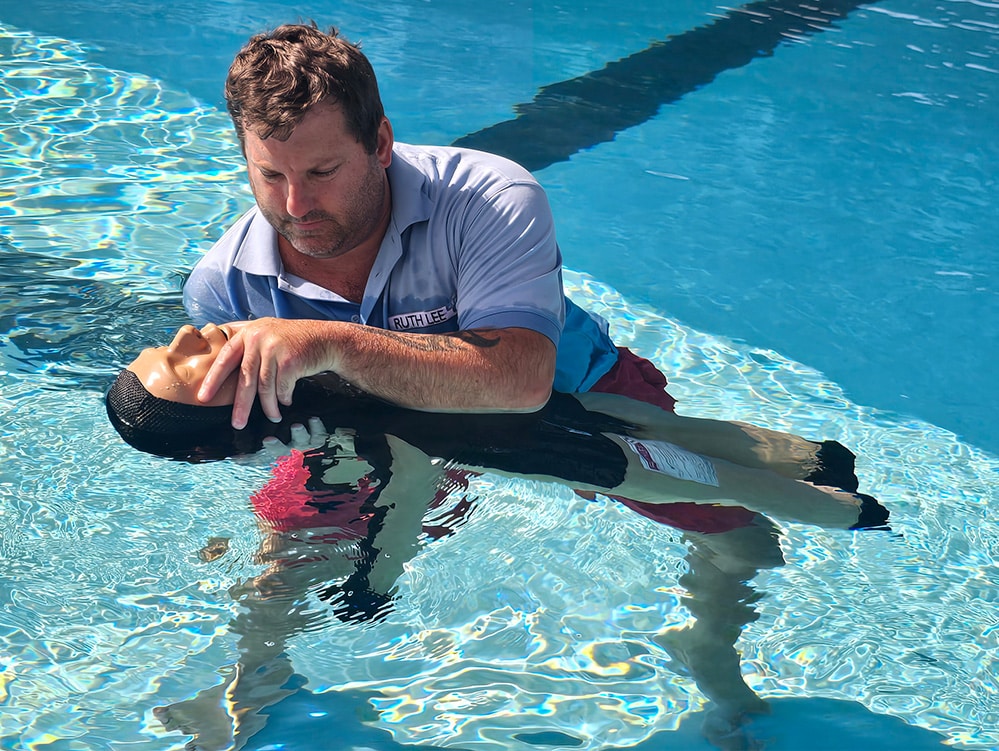
When it comes to spinal injury management, realism matters. In aquatic environments, slips, falls and diving accidents are genuine risks – and lifeguards need training that prepares them for the real weight and resistance of a casualty in the water.
Stephen Waterman, an experienced Australian lifeguard and trainer, regularly incorporates the Ruth Lee Pool Rescue Manikin into a wide range of training scenarios. In a recent spinal injury management session using the manikin alongside spinal boards, he reflected on just how valuable realistic equipment can be in preparing teams for high-risk situations.
“Working with the Ruth Lee manikin added a new level of authenticity. The lifelike weight distribution and flexible limbs made handling feel very close to a real casualty.”
The session focused on simulated suspected spinal injuries – scenarios common in aquatic facilities. Practising both solo and duo extrication methods proved particularly valuable, especially for smaller facilities or low-staffed environments.
“The manikin’s design prevented unrealistic assistance, forcing us to rely on correct technique and collaboration.”
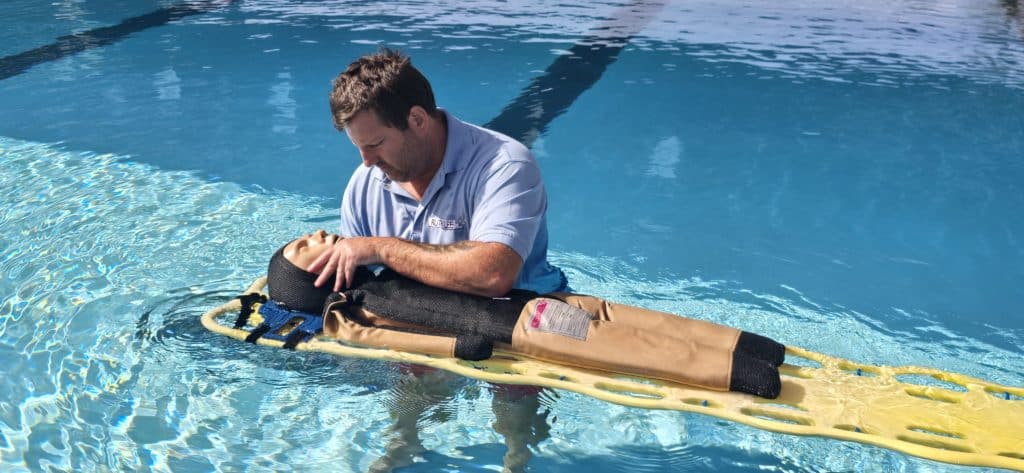
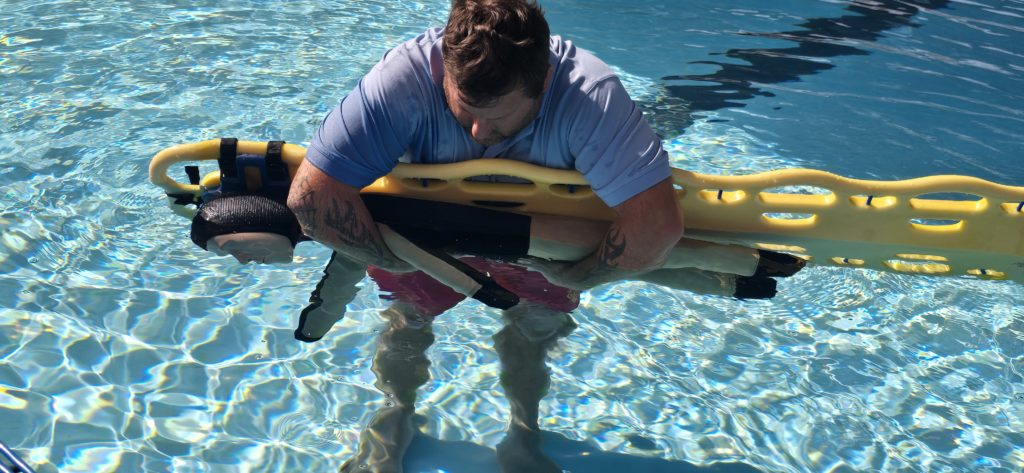
For Steve, this type of immersive training goes far beyond traditional drills:
“This experience was incredibly valuable and realistic, far beyond traditional drills… it boosted both myself and my mate’s confidence and competence, ensuring we are better prepared for real-world emergencies.”
He concludes:
“The combination of the Ruth Lee Pool Rescue Manikin and spinal board is an outstanding tool for lifeguard development. I highly recommend it for any aquatic centre aiming to elevate safety standards.”
Realistic, repeatable training builds precision, teamwork and calm execution — exactly what’s required in spinal rescue scenarios.
🔗 Learn more about the Ruth Lee Pool Rescue Manikin here.
📖 Read Steve’s related article on Inclusive Lifeguard Training and supporting swimmers with disabilities.