
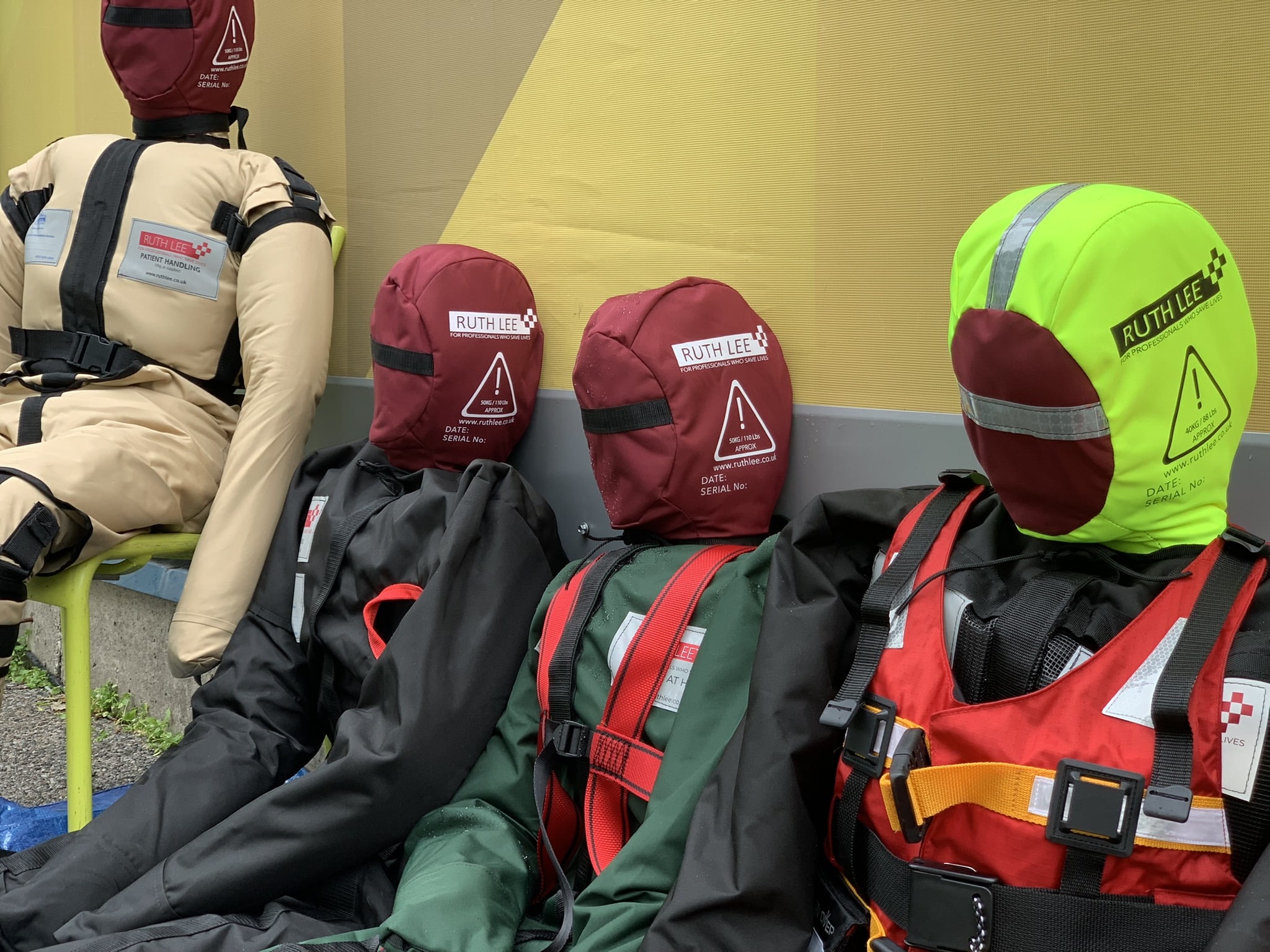
Cold weather, muddy training grounds and wet equipment can make winter a challenging time for rescue training. Here’s how to give your training manikins a little TLC and help keep them ready for whatever the next exercise brings.
Ruth Lee manikins are built to withstand demanding training environments. From casualty drags across rough terrain to water rescue exercises and challenging patient handling scenarios, they’re designed to take on the tasks that human volunteers simply can’t.
But even the toughest training equipment benefits from a little care and attention.
As winter approaches, it’s the perfect time to check the condition of your manikins, review your cleaning routine and make sure your equipment is being stored correctly. A few simple maintenance habits can help prolong the life of your manikins, reduce unnecessary wear and tear, and ensure they’re ready when your team needs them.
Here are five things to add to your winter maintenance checklist.
1. Give your manikins a thorough inspection
Before and after use, take a few minutes to give your manikins a visual inspection. Winter training can be particularly demanding, with wet conditions, mud and rough surfaces potentially contributing to general wear and tear.
Look out for:
- Tears or holes: Check the body fabric for damage that could affect handling or allow the internal filling to become exposed.
- Worn or damaged stitching: Inspect seams carefully for loose threads, unstitched areas or signs that the stitching is wearing thin.
- Embedded debris: Check that stones, sharp objects or other debris haven’t become lodged in the manikin’s body.
- Loose limbs or components: Make sure limbs are secure and that nothing is likely to come loose during a training exercise.
If you spot damage, assess whether the manikin is safe to continue using before putting it back into service. If you’re unsure, speak to the Ruth Lee team for advice. Repair heads and other items are available.
2. Protect your investment with a good set of overalls
If there’s one piece of advice we’d recommend across our entire manikin range, it’s this: use the protective overalls.
Ruth Lee recommends using the supplied protective overalls with all manikins, in all circumstances. Think of them as a consumable item rather than something that should last forever.
Overalls take the brunt of the mud, abrasion and general punishment that comes with realistic training. Replacing them when they become worn or damaged helps protect the manikin underneath and can prolong its working life.
Getting your manikin dressed and ready for training doesn’t have to be a struggle, either! If you’ve ever wrestled with a manikin’s overalls and boots, we’ve got you covered.
Watch our video on how to easily dress your manikin in overalls and boots for a step-by-step guide to getting your manikin training-ready.
Don’t forget the boots and booties
Depending on your training activities, additional protective equipment can also help reduce wear and tear.
Replacement Wellington boots are available for most of our manikins, providing protection during demanding training exercises. If yours are looking a little worse for wear after a busy year of training, it may be time for a replacement.
Explore our replacement Wellington boots.
For lifeguard training, we can provide protective booties for our Pool Rescue Manikin. These help protect the feet from abrasion if the manikin is dragged across the pool deck, where repeated contact with the surface can cause additional wear. We always recommend carrying the Pool Rescue Manikin – NOT dragging. But if you think your teams will inevitably drag the manikin, protective booties are a necessity. Remember, if you use the manikin for Lynxight testing, a protective overall MUST be worn for warranty protection.
Find replacement booties for the Pool Rescue Manikin.
Checking these protective items regularly and replacing them when necessary is a simple way to help keep your manikin in good condition, without compromising the realism of your training exercises.
3. Clean thoroughly and avoid harsh chemicals
Training manikins can pick up all sorts of dirt during an exercise, particularly during outdoor training in wet or muddy conditions. Fortunately, Ruth Lee manikins are manufactured using tough, water resistant polyester that’s designed to be easy to clean and decontaminate.
For routine cleaning, follow these simple steps:
- Remove the protective overalls. These can be machine washed at 40°C. Do not tumble dry.
- Wipe down the manikin. Use soapy water to remove ordinary dirt and grime.
- Deal with stubborn contamination carefully. If the manikin has been soiled with oil or similar substances, use a suitable cleaning fluid in accordance with its instructions, then wash with soapy water to remove any remaining traces of the cleaning fluid.
- Avoid bleach and caustic-based cleaning products. These can damage the fabric over time and compromise its integrity.
Always follow the care instructions for your particular manikin and any cleaning product you use.
A note on hazardous substances: If a manikin has been exposed to hazardous materials during an exercise, it must be decontaminated along with the rest of the equipment before it is handled again. If the manikin has absorbed the substance, seek specific instructions from your Hazmat Officer rather than relying on routine cleaning methods.
4. Dry it properly before putting it away
This is particularly important during winter.
When training takes place in wet weather, it’s tempting to get the equipment back into storage as quickly as possible. But putting a damp manikin away can create problems, particularly if moisture becomes trapped during storage.
After cleaning or using a manikin in wet conditions, hang it up in an airy place and allow it to dry thoroughly before stowing it away.
For general-purpose manikins, this means ensuring the outer fabric and any protective clothing are completely dry.
Special care for water and pool rescue manikins
Water rescue manikins are designed to allow water to enter during use, so it’s important to let that water drain out after an exercise. To help with drainage:
- Hang the manikin using the large webbing loop on its back.
- Remove the Wellington boots to help water drain away.
- Allow the manikin to drain and air thoroughly.
- Make sure it’s completely dry before returning it to storage.
This is especially important when preparing equipment for longer periods of storage. Allowing water to drain and the manikin to dry properly helps reduce the risk of mould developing.
Remember, waterproof doesn’t mean that a manikin should be put away wet!
6. Treat your manikin like a volunteer casualty
It might sound obvious, but one of the best ways to extend the life of your training equipment is to treat it with the same care you’d give a volunteer casualty.
Ruth Lee manikins are designed for demanding training, but deliberately dropping or abusing them can cause avoidable damage. They should also be kept away from fire, excessive heat and hazardous substances unless the relevant product instructions specifically permit the intended use.
Different manikins have different features and functions, so it’s worth familiarising yourself with the care requirements for your particular model. A general-purpose manikin with a replaceable overall will have different maintenance needs from a specialist water or pool rescue manikin that needs to be drained and aired after use.
If your winter inspection reveals worn overalls or damaged Wellington boots, replacing these protective items can help prevent unnecessary wear to the manikin itself. It’s worth checking them regularly, particularly if your equipment sees frequent use on rough terrain or pool decks.
If you discover damage to the manikin itself, don’t ignore it. Identifying wear early gives you the opportunity to seek advice and explore suitable repair or replacement options before the next training session.
Ready for winter? Make maintenance part of your routine
A winter health check doesn’t have to be complicated. Regular inspections, protective overalls, appropriate cleaning and thorough drying can all help keep your training manikins in good condition.
Most importantly, remember that different manikins have different maintenance requirements. Always refer to the care guidance for your specific model, particularly if your equipment has specialist features or is used for water rescue training.
Need advice about caring for your Ruth Lee manikins, replacing worn protective equipment or dealing with damage? Our team is here to help.
Speak to the experts
Ruth Lee Ltd
📞 +44 (0) 1490 413 282
✉️ mail@ruthlee.co.uk
🌐 www.ruthlee.com
Give your manikins a little TLC this winter. They’ve certainly earned it!