
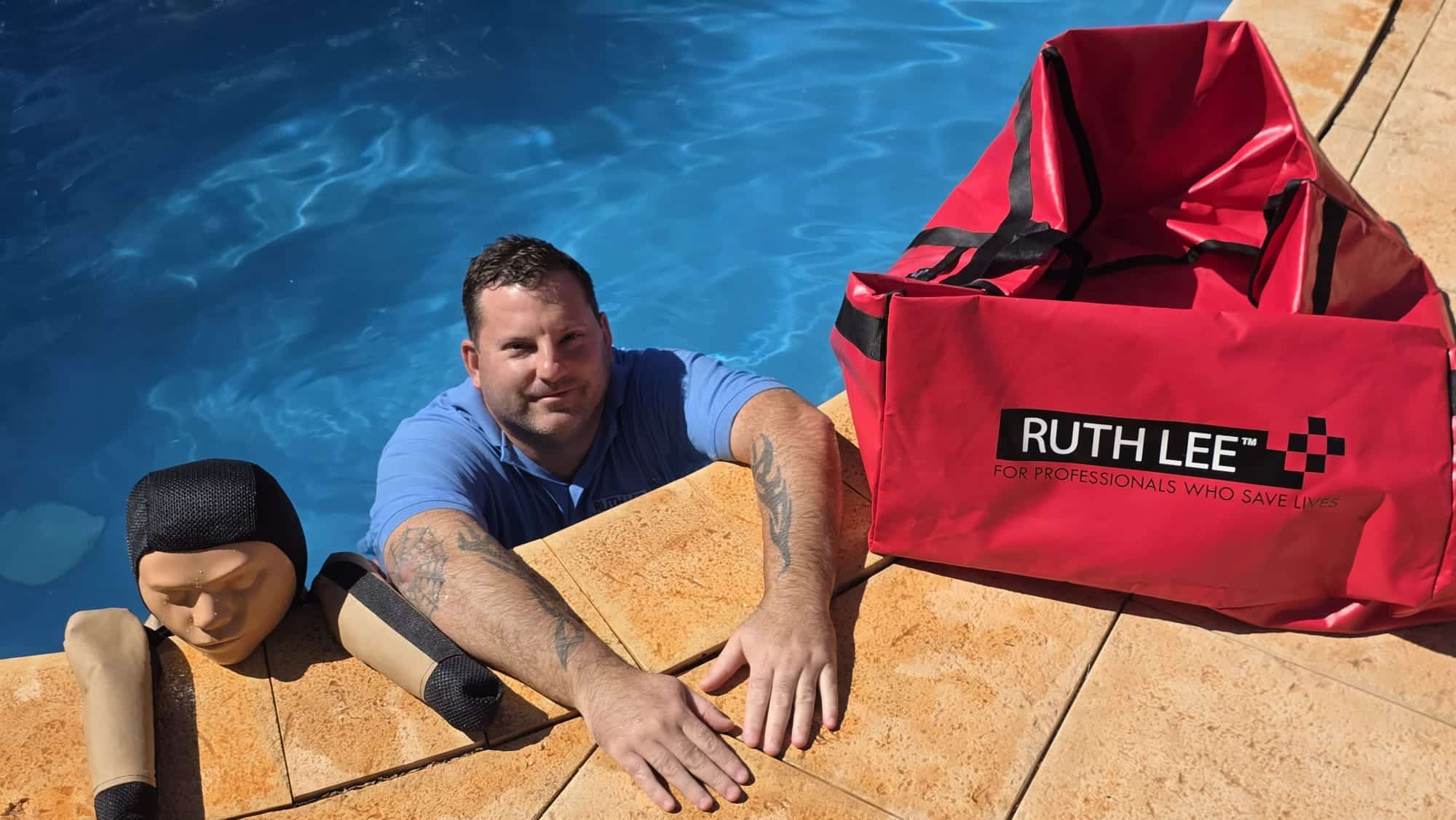
By Steve Waterman – Official Ruth Lee Ambassador (Australia)
Deep water retrieval is one of the most physically and psychologically demanding skills a lifeguard will ever practise. When a casualty is submerged in deep water unresponsive, dead weight, offering no ability to assist the lifeguard has nothing to rely on except technique, composure and training.
For years, this scenario was almost impossible to replicate properly. Live volunteers could never truly behave like an unconscious casualty. Instinct kicks in and they want help, they brace, they hold their breath differently, or their body position changes. The result was a gap between what Lifeguards practised and what they would actually face when it mattered.
The Ruth Lee Pool Rescue Manikin, which I use in my training sessions closes that gap completely.
Why Deep Water Retrieval Demands Realistic Training
In a real deep water emergency, the challenges are very different from surface rescues. A casualty may be lying flat on the pool floor or suspended mid water. There’s no communication. No cooperation and the clock is running.
A Lifeguard must be able to:
- Recognise and Communicate
- Locate and approach the casualty safely
- Descend efficiently without wasting energy
- Establish a secure hold without losing position
- Ascend with controlled buoyancy while managing dead weight
- Transition straight into a tow and then a poolside extrication
None of this can be faked. Muscle memory only develops through repetition and repetition only works when the training tool behaves like the real thing.
Where the Ruth Lee Manikin Changes Everything
The Ruth Lee Pool Rescue Manikin behaves like an actual unconscious casualty. It sinks when released, floats correctly when held in the right tow position and provides the kind of dead weight resistance that builds real strength, technique and confidence.
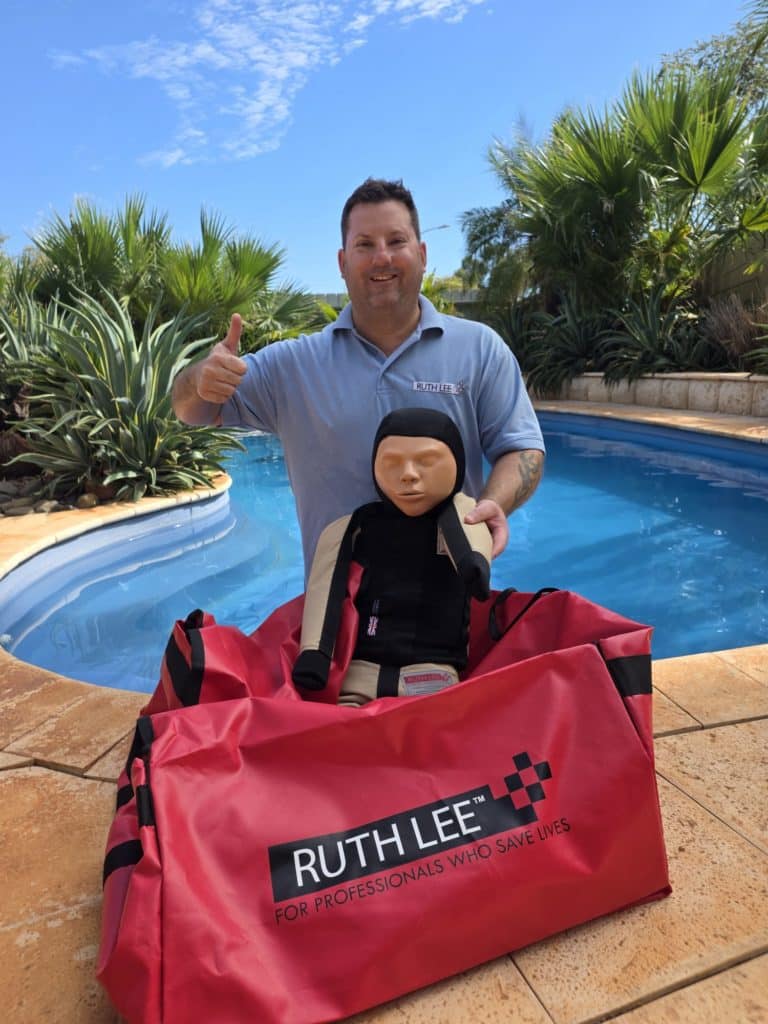
In my programs, I use the manikins affectionately known as Bobby (Adult) and Bobby Jr (Child) to run the full deep water retrieval sequence.
Phase 1 — Recognise, Communicate and Commit to the Rescue
This phase is all about early recognition and decisive action. Lifeguards must read the situation quickly, confirm it as an emergency and alert the team using the correct whistle blasts, radio calls and hand signals. It’s not just about making noise it’s about creating instant shared awareness across the pool deck.
Once the alert is made, they commit. That means choosing the safest entry, entering cleanly and swimming towards the casualty with purpose. This moment sets the tone for the entire rescue. Hesitation, poor communication or a sloppy entry will cost seconds they don’t have in a real incident.
Phase 2 — Pool Floor Retrieval
The manikin is placed on the pool floor in the deep end. Lifeguards must descend, establish a hold and bring the casualty to the surface. This phase exposes weaknesses immediately: inefficient kicks, poor breath control and holds that simply won’t work under pressure.
Because the manikin doesn’t resist or assist, trainees must generate every bit of momentum themselves exactly as they would in a real emergency.
Phase 3 — Surface Tow
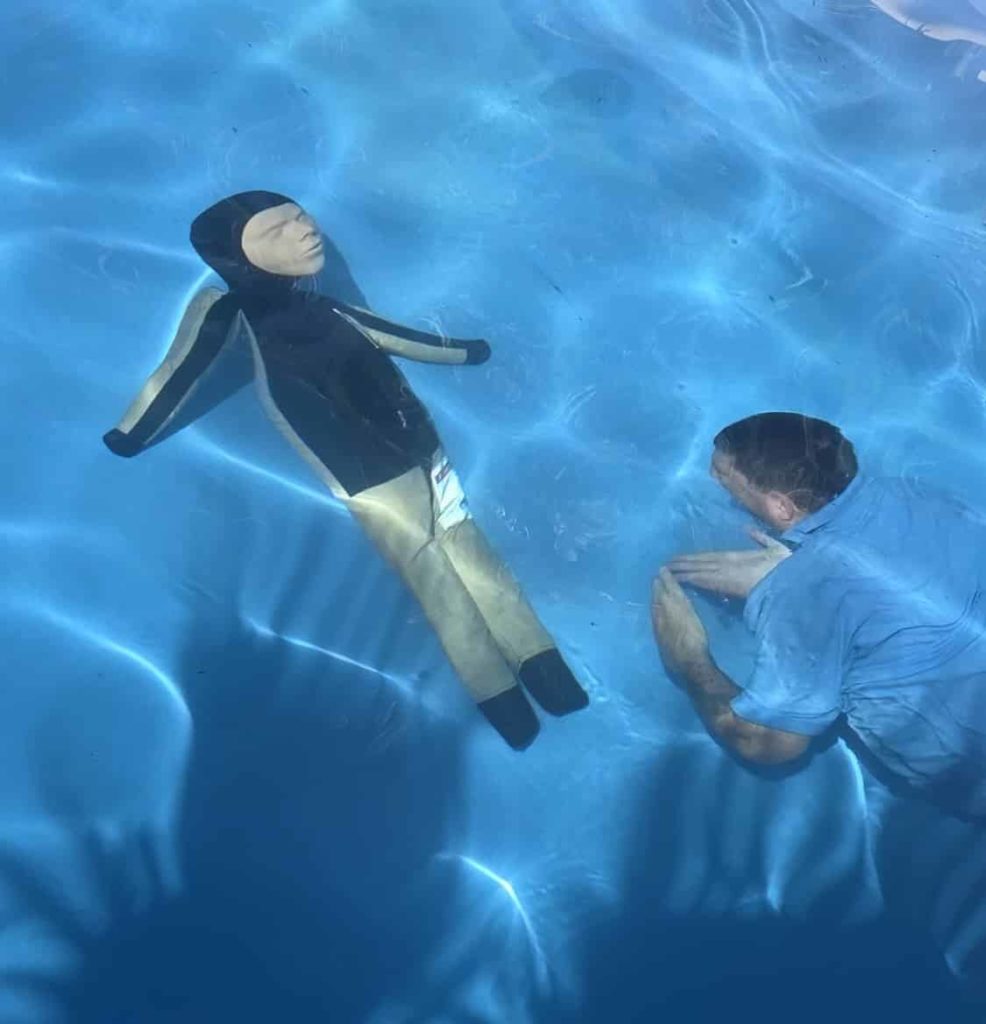
At the surface, trainees transition straight into a tow. The manikin’s buoyancy is engineered so that when held correctly, it floats at the right angle. When held incorrectly, it sinks. That instant feedback forces lifeguards to adjust their technique in real time just like they would with a real unconscious casualty.
Phase 4 — Poolside Extrication
Extrication of a passive casualty from the water is one of the most underestimated challenges in lifeguarding. The weight, the angle, the leverage it’s all working against you. With the Ruth Lee Manikin, Lifeguards can practise full extrications, two to four person lifts and transitions onto a spinal board without putting a live volunteer at risk.
The Psychological Dimension
Technical skill is only half the battle. The other half is psychological.
Many lifeguards even experienced ones have never performed a true deep water retrieval on a completely unconscious casualty. The first time they feel that weight, that silence, that pressure should not be during a real emergency.
Repetition with the manikin builds what I call trained calm, the ability to stay composed and execute because your body has done it before. Natural confidence is fragile. Trained calm is reliable.
By the time a Lifeguard has completed multiple deep water retrievals, the panic response is dramatically reduced. They know the weight. They know their breath limits. They know what a correct tow feels like.
Final Thoughts
Deep water retrieval shouldn’t be a skill Lifeguards practise occasionally and hope they never need. It should be a core competency trained regularly, trained realistically and trained until it becomes instinct.
The Ruth Lee Pool Rescue Manikin makes that possible. It removes the limitations of live volunteer training and introduces realistic weight, resistance and repeatable scenarios that build genuine capability.
Train deep. Train realistic. Train often. Because when someone is on the pool floor, there is no second chance to get it right.
🔗 Learn more about the Ruth Lee Pool Rescue Manikin here.
📖 Read Steve’s related article on Inclusive Lifeguard Training and supporting swimmers with disabilities.