
For paramedics, emergency responders, and trauma teams, decision-making under pressure can mean the difference between life and death. The ability to recognise injuries quickly, apply life-saving interventions, and work effectively as a team is central to trauma care.
Traditional training methods – lectures, case studies, and skill practice with manikins or volunteers – already play a vital role in building these capabilities. But what if there was a way to take that foundation and make it even more immersive, dynamic, and lifelike?
That’s exactly what RL360, our mixed reality training platform, was designed to achieve.
What is RL360: Trauma Lens?
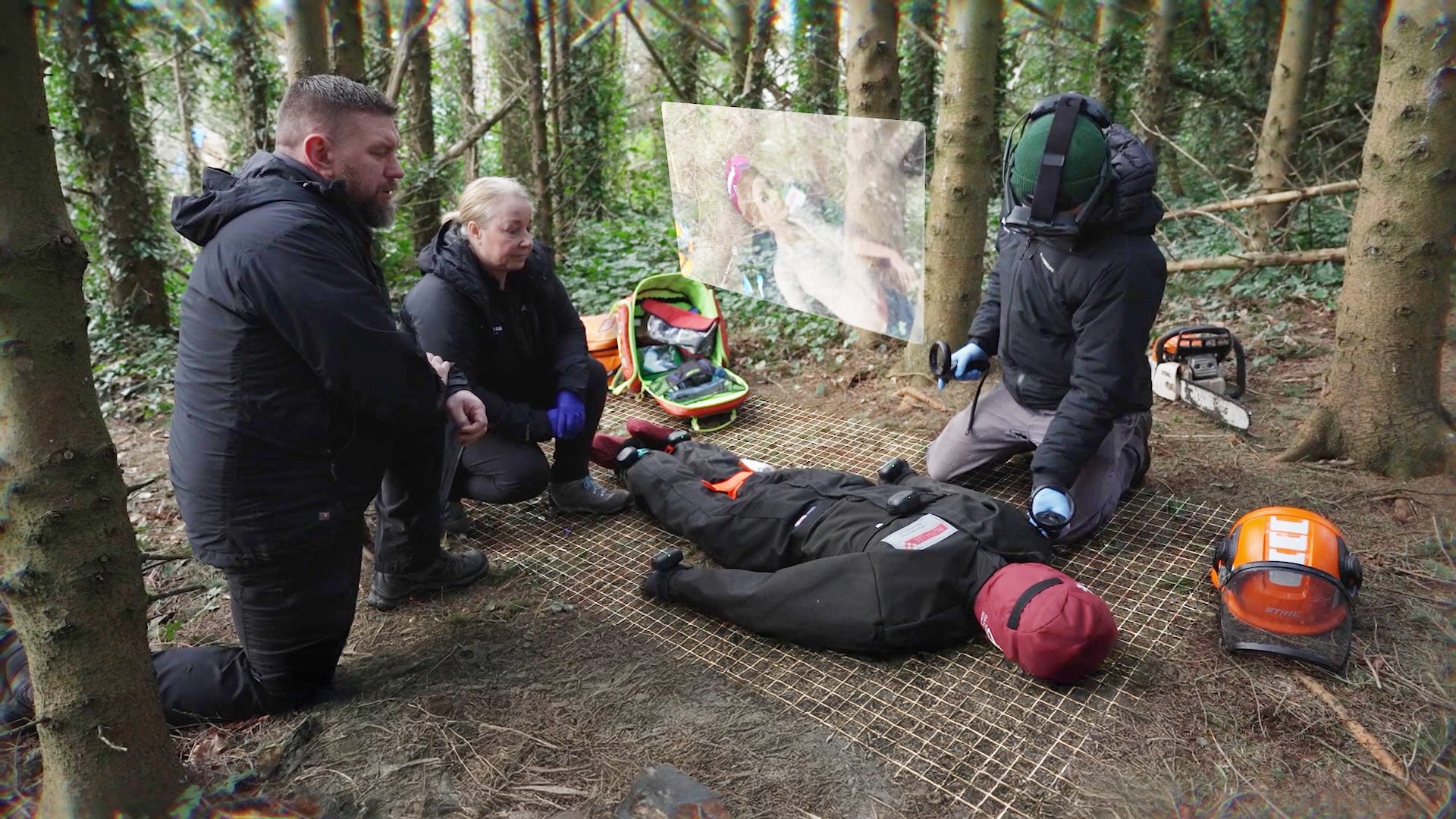
The Trauma Lens module of RL360 brings trauma training to life by overlaying a digital “skin” onto your existing Ruth Lee manikins. Using a mixed reality headset, learners no longer just see a static patient – they see a responsive, interactive casualty who bleeds, moans, speaks, and deteriorates in real time based on the care given.
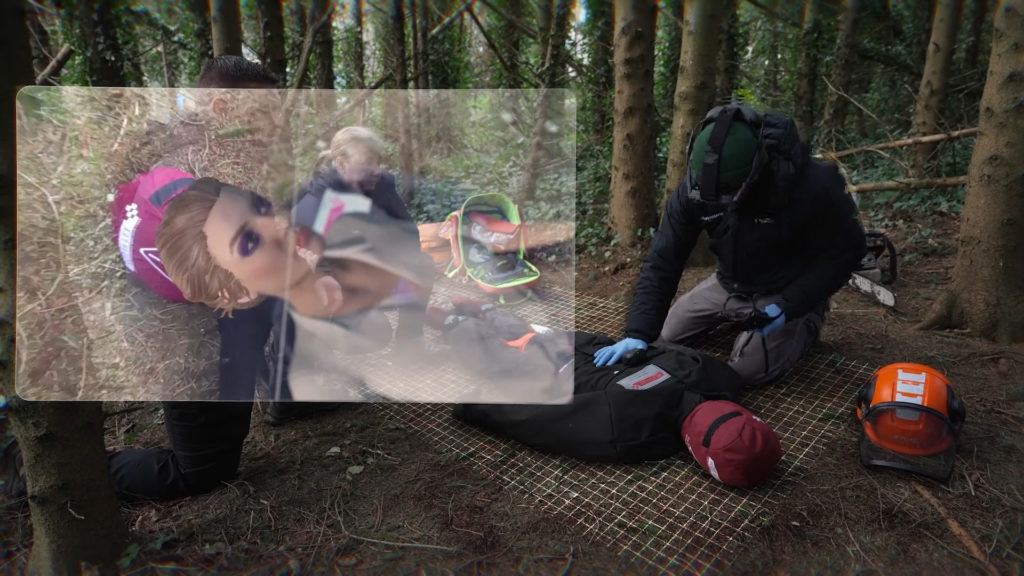
RL360 overlays a responsive digital patient onto the manikin, blending realistic trauma cues with the real training environment.
One trainer summed it up well:
“I remember the first time I used it. I walked up to the casualty, and he turned and looked at me. I could see he was breathing, and it changed everything. I instantly wanted to interact with him” (Rachel Smith, Outreach Rescue and Red Square Medical)
As a quick refresher, RL360 combines physical training manikins with interactive digital overlays, creating a fully immersive environment that enhances realism and improves learning outcomes. And the best part? You don’t need to replace your current manikins – RL360 works alongside them, bringing them to life in new and exciting ways.
This same mixed reality approach isn’t limited to trauma and bleeding control – it’s also transforming assessment training. Learn more about how RL360 is revolutionising Glasgow Coma Scale training in our dedicated blog → Beyond the Flashcards: How RL360 Is Revolutionising Glasgow Coma Scale Training.
The Traumatic Bleeding Scenario
One of the most high-impact scenarios in the Trauma Lens is the severe leg laceration with rapid blood loss. Here, trainees are faced with a casualty who is losing blood quickly – and every second counts.
The patient isn’t passive. They might cry out in pain, drift in and out of consciousness, or deteriorate visibly if bleeding control isn’t managed quickly and effectively. This forces learners to prioritise, communicate, and act with urgency, just as they would in the field.
Interventions such as simulated tourniquet application and wound dressing are tracked and scored in real time, offering immediate feedback on performance. Trainers can record and replay scenarios, highlight decision-making under pressure, and measure improvement over time. These features introduce powerful elements of gamification – encouraging engagement, repetition, and progression while keeping the focus firmly on clinical outcomes.
If you’d like to explore this further, we’ve written more about the role of gamification in training and how RL360 brings it to life here → The Power of Gamification in Training and How RL360 Brings It to Life
It’s a safe but incredibly powerful way to rehearse what, in reality, are life-or-death skills.
How Bleeding Control Training is Usually Done
Bleeding control training traditionally relies on moulage kits, fake blood, and advanced trauma manikins – such as our Trauma Rescue Manikin – which can simulate catastrophic haemorrhage using pumping artificial blood. These physical systems are excellent for hands-on skills training, allowing responders to experience the mess, pressure, and stress of applying a tourniquet to a severely bleeding limb.
At the same time, expectations around trauma training are evolving. Recent updates to the Resuscitation Council UK guidelines place greater emphasis on early trauma recognition and rapid intervention, particularly in cases of catastrophic bleeding where time-critical decisions can be lifesaving. The focus is increasingly on preparing responders at all levels to assess, prioritise, and act decisively long before advanced hospital care is available.
You can read more about what’s changed in the guidelines and what this means for trauma training in our dedicated blog → 2025 Resuscitation Guidelines: What You Need to Know – Fire Service, Hospitals & Care, Education Providers and Leisure Facilities. (Select your sector to read more).
However, while traditional bleeding simulations are highly effective, they also come with practical limitations. Training with fake blood can be messy, time-consuming to set up and clean down, and isn’t always suitable for classrooms or shared training spaces. These constraints can limit how often scenarios are run and how widely they’re used.
That’s where RL360 comes in. By simulating urgency, deterioration, and patient response digitally, RL360 allows teams to train the same decision-making processes without the logistical challenges of blood packs and moulage. This makes it easier to run realistic trauma scenarios more frequently and in a wider range of environments – supporting the shift towards regular, immersive trauma training.
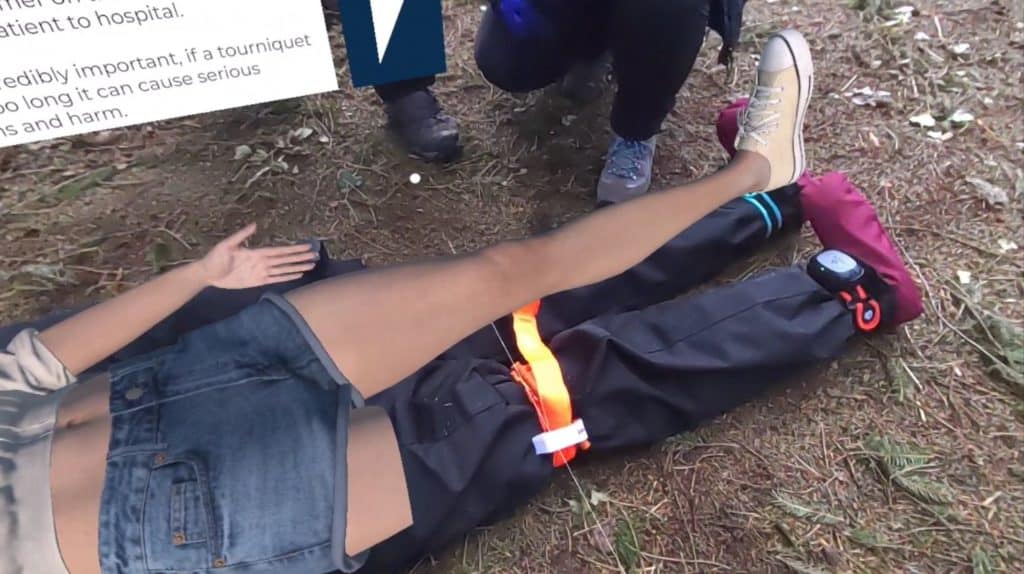
During hands-on interventions, the digital overlay is removed to expose the manikin, enabling accurate physical skills practice while the scenario continues to evolve.
Lillie Birch, Professional Development Nurse at the Robert Jones and Agnes Hunt Orthopaedic Hospital NHS Trust, said:
“I feel it would create a great safe space for the staff, psychologically, to go through the scenarios without the fear of harming a patient or anybody else around them. They can practise on it as many times as they feel before actually going out into the field. The possibilities are endless.”
Why Choose RL360 for Bleeding Control Training?
So, why should teams add RL360 into their training mix when they already use manikins, moulage, or live drills? Here are some of the key benefits:
Hybrid realism: Keep the tactile, physical skill of applying a tourniquet on a real manikin limb, but add the digital overlay of bleeding, pain response, and patient deterioration for a complete learning experience.
Frequency and flexibility: Run scenarios in classrooms, stations, or lecture halls without the time, cost, or clean-up of moulage blood packs. More training, less prep.
Decision-making under pressure: RL360 isn’t just about technical skill – it pushes trainees to think clearly, prioritise, and act fast under realistic stress.
Real-time and recorded feedback: What the trainee sees in the headset can be cast to a screen or handheld device, so trainers can observe the scenario as it unfolds and provide live feedback. Scenarios can also be recorded for detailed review afterwards.
Team-based learning: Casting makes RL360 a shared experience – whole teams can observe, discuss, and learn together, strengthening not just individual capability but also communication and leadership under pressure.
Greg Cain from Outreach Rescue summed it up:
“The potential of this thing is absolutely massive, isn’t it?”
Want to See It in Action?
RL360 is already being used by training centres, universities and emergency services to enhance first aid, pre-hospital trauma response, airway assessment and GCS training.
We’d love to show you what it can do.
📩 Request a free demo, ask for a brochure, or just reply to chat – no pressure, we’re happy to help!
👉www.ruthlee.com/ruth-lee-360/