
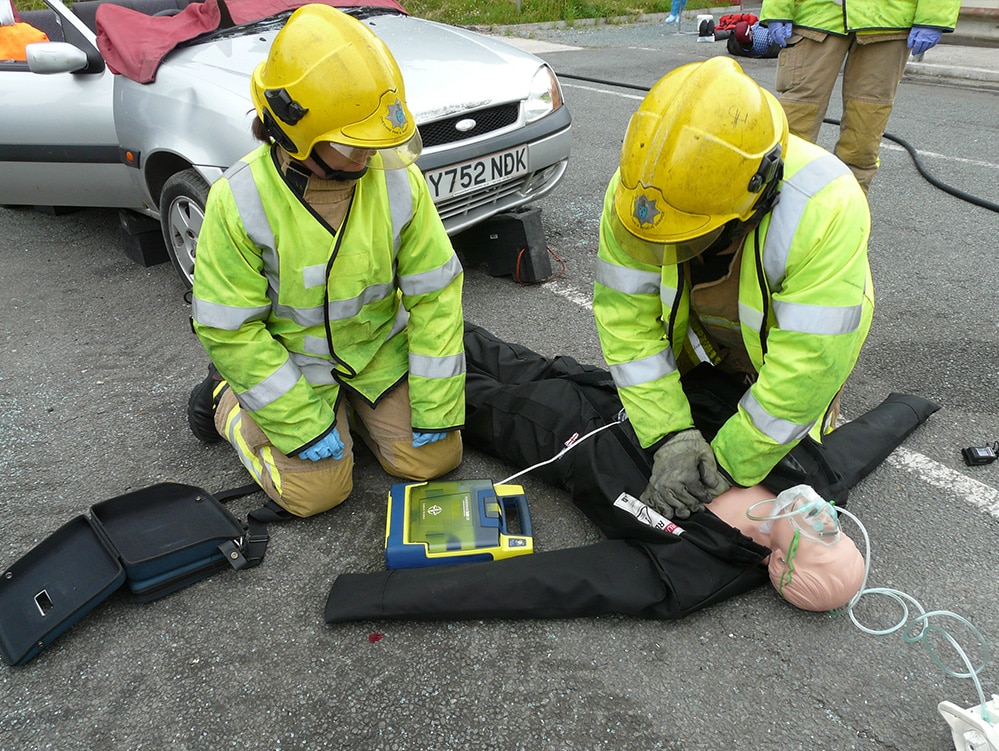
The Resuscitation Council UK (RCUK) has released the 2025 Resuscitation Guidelines, setting out the latest evidence-based best practice for first aid and emergency care across all sectors. For Fire and Rescue Services, these updates are particularly important – reflecting the increasingly diverse medical response roles firefighters undertake at incidents every day.
Whether attending a road traffic collision, supporting community first responder programmes, or providing life-saving care before ambulance crews arrive, firefighters are often the first on scene – and these new guidelines ensure their training reflects the most current clinical standards.
At Ruth Lee, we know how vital realistic, integrated training is for operational readiness. The 2025 guidelines strengthen the emphasis on combining CPR, airway management, and catastrophic bleeding control into one cohesive approach to emergency response – areas where our Trauma Rescue Manikin excels.
What’s New for Fire and Rescue Services
The 2025 Resuscitation Guidelines introduce several updates that will directly influence first aid and trauma training in the fire sector:
🩸 Life-Threatening Bleeding Control – One of the biggest updates is the addition of guidance for managing catastrophic bleeding. Firefighters are often first on scene at high-impact incidents where severe trauma is possible. The new standards highlight the need for confident use of tourniquets, wound packing, and pressure application – skills that must now be fully embedded in all emergency responder training.
❤️ CPR and Airway Management – Firefighters have long played a key role in cardiac arrest response, and the new guidance includes important updates on compression depth, defibrillation timing, and airway techniques. It reinforces the value of simulation-based training and teamwork, ensuring responders deliver high-quality CPR even under operational pressures.
👶 Paediatric and Vulnerable Casualties – Fire crews increasingly attend incidents involving children and vulnerable individuals. The 2025 guidelines refine the approach to paediatric resuscitation and post-resuscitation care, ensuring responders are confident and competent in these sensitive scenarios.
🧠 Bystander Response and Simulation – Realism is central to effective training. The new guidelines emphasise simulation and gamified learning as best practice for embedding first aid skills that hold up under stress. Tools such as RL360 – Ruth Lee’s immersive training platform – can enhance this, combining virtual environments with physical manikins to create realistic, memorable multi-casualty or trauma scenarios.
Bringing the Guidance to Life: The Trauma Rescue Manikin
The Ruth Lee Trauma Rescue Manikin has been purpose-built to support the kind of multi-skill training outlined in the new guidelines. Designed in consultation with emergency services, it provides a durable and highly realistic platform for trauma, bleeding control, CPR, and airway management in a single model.
Key features include:
✅ Bleeding control simulation – Integrated wound-packing task trainer on the thigh for realistic haemorrhage control practice.
✅ CPR & Airway functionality – Supplied with a Simulaids Torso or compatible with a range of CPR torsos for flexibility.
✅ Optional IO/IV arm (30kg model) – Enables advanced trauma care training for responders working alongside medical personnel.
✅ Rugged construction – Suitable for use in live firehouses, RTC extrication scenarios, or outdoor exercises.
By using the Trauma Rescue Manikin, Fire and Rescue Services can seamlessly integrate the 2025 RCUK updates into existing trauma and medical response programmes – ensuring every firefighter is prepared to deliver critical interventions with confidence and precision.
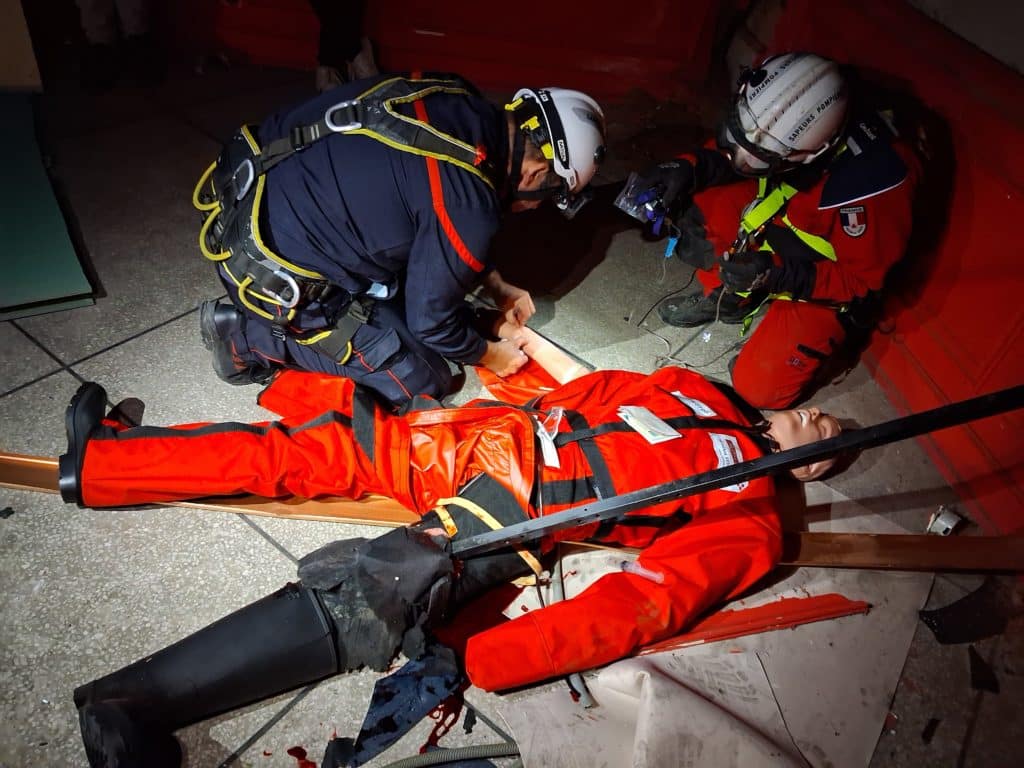
SDIS integrate the Trauma Rescue Manikin into their scenarios for added realism
Why This Matters for Fire and Rescue Training
The modern firefighter’s role goes far beyond fire suppression. From road traffic collisions and industrial accidents to medical co-responder programmes, the fire service is an integral part of the UK’s pre-hospital emergency care network.
The 2025 Resuscitation Guidelines ensure that training across all services aligns to a single, evidence-based standard – improving consistency and ultimately, patient outcomes.
By embedding these updates early and using training tools like the Trauma Rescue Manikin, Fire and Rescue Services can stay ahead of national standards, ensuring their teams are equipped to meet the highest levels of operational and clinical excellence.
Be Ready for 2026
The RCUK encourages all organisations to start preparing for the changes now, with updated courses and manuals available from January 2026.
If you’re a training officer, watch manager, or medical lead within your service, now is the time to review your first aid training provision. The Ruth Lee Trauma Rescue Manikin is ready to help you deliver training that meets – and exceeds – the new national guidelines.
👉 Contact us today to discuss how your facility can roll out training in line with the new 2025 Resuscitation Guidelines.