
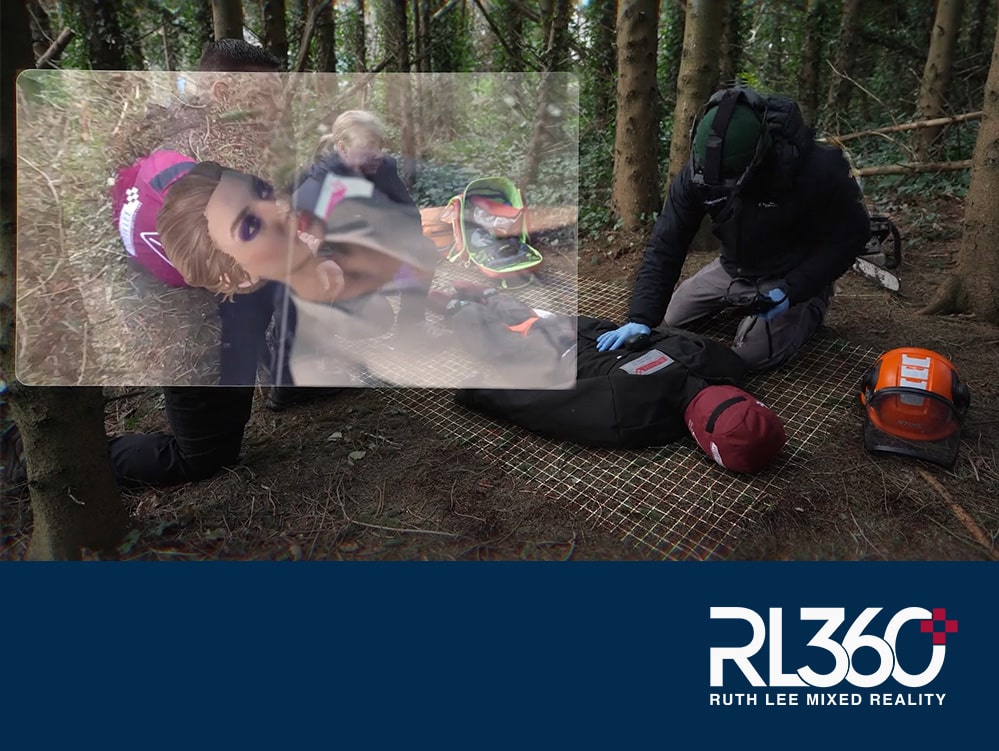
In frontline emergency response, every second matters. Yet, traditional training methods – flashcards, PowerPoints, role-plays – often fall short of delivering the speed, realism, and stress of real-world incidents.
The question becomes: how can we make training not just more interactive, but truly effective?
The answer: Gamification
Gamification is the practice of applying game-design elements – such as scoring, competition, timed challenges, rewards and feedback loops – to non-game contexts.
It transforms learning from passive to active, from predictable to immersive, and from knowledge-based to performance-based.
It’s also a core component of Serious Games: simulations designed for training and professional development rather than entertainment. Our latest technology-led training tool, RL360, sits directly in this category, using gamification not just to engage learners but to meaningfully improve skill acquisition.
Why Gamification Works
Gamification injects elements of challenge, competition, urgency, and feedback into learning. And it works. Research shows that gamified training programs:
- Motivation increases dramatically – 83% of learners in gamified programs feel more motivated than those in traditional training. (LearnExperts)
- Knowledge retention improves – studies show nearly a 40% increase in retention with gamified learning. (Code Of Talent)
- Practical skills strengthen – active, challenge-based learning enhances decision-making under pressure. (Columbia Business School)
For rescue training, where decision-making under pressure is critical, these benefits aren’t just nice to have; they’re essential.
Bringing Low-Risk Stressors into Safe, Realistic Scenarios
Beyond engagement and retention, gamification provides a way to safely simulate stress. Time limits, point-scoring, scenario escalation – all mimic the urgency of real incidents without actual risk. Pair this with advanced simulation tools like heavy-weight manikins designed for use in real-world locations, and you replicate real conditions far better than a static classroom.
When gamified tasks are layered with realistic visual, auditory and tactile stimulus, trainees get used to performing under pressure – without ever compromising safety.
Enter RL360: Training Gamified for First Response
Meet RL360 – a mixed-reality training system designed specifically for paramedics, rescue, and healthcare simulation.
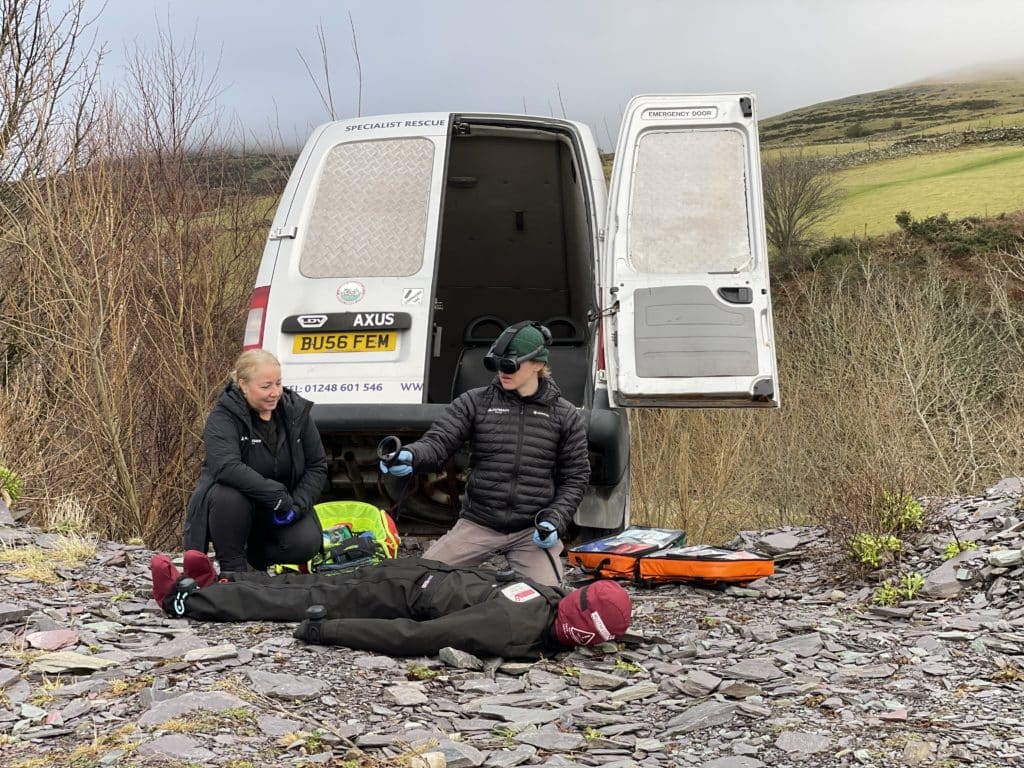
Here’s how it works:
- A Ruth Lee manikin lays before the trainee. The user puts on an XR headset (in partnership with HTC VIVE) and the manikin is overlaid with a digital “skin”. It reacts: opens eyes, speaks, bleeds, responds to care.
- The scene is not a virtual world (VR) – it’s the real space around you (ambulance set, ward bay, outdoor site). The only change is the manikin, enhanced with a virtual layer.
- For gamification: timed skill-tests, scenario-specific challenges (e.g., rapid triage countdowns, multi-casualty escalation), live feedback, a varying library of scenarios across gender, age, ethnicity and injury type.
Because the system assesses how accurately a trainee completes a task, RL360 also acts as a powerful tool for monitoring learning progress – rewarding improvement, identifying weaknesses, and building confidence through clear, measurable achievement.
This fosters healthy competition and a strong sense of personal accomplishment, prompting learners to strive for higher scores, faster decisions, and better outcomes.
Putting It Into Practice
Picture the scene: your trainee steps into a simulation bay. In front of them is a Ruth Lee manikin. They put on their XR headset – and instantly, that manikin transforms into a live patient who reacts to their presence and the scenario around them.
In the Primary Survey module, the patient is suddenly surrounded by virtual hazards the trainee must identify and remove. They cry out in pain, a deep laceration on their arm bleeding profusely – every detail demanding quick, decisive action.
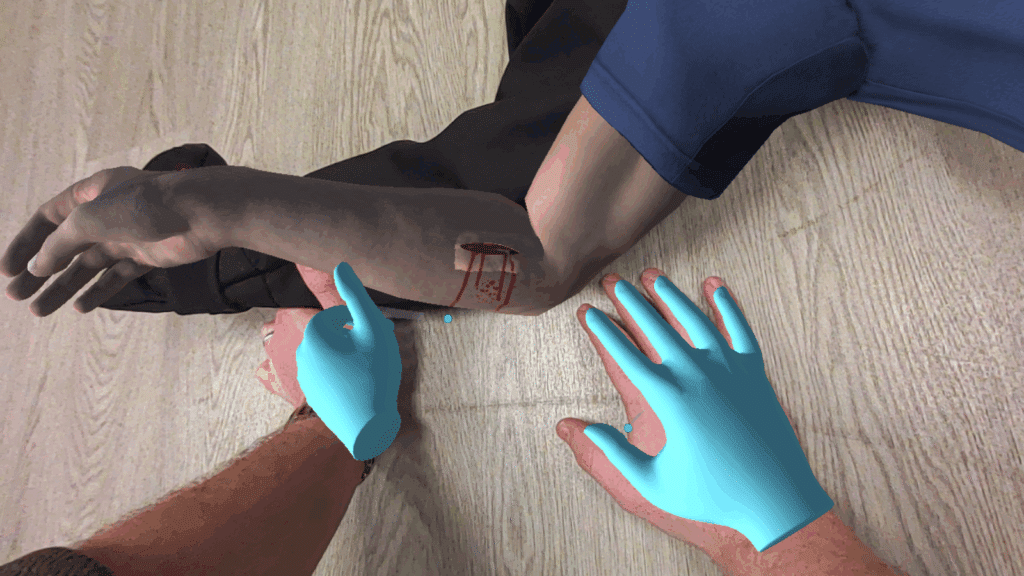
Switch to the Ten Second Triage scenario, and the environment changes. The first patient appears stable so the trainee can triage them and move onto the next patient who is fairing much worse – a rebar is protruding from their thigh and it’s clear they’re losing consciousness from blood loss and requiring immediate care. The clock is ticking, and the trainee knows both their timing and treatment decisions are being tracked for accuracy.
This is where RL360 truly shines – combining gamified urgency with lifelike visuals and responses to bridge the gap between sterile training rooms and the unpredictable realities of emergency response. It’s immersive, measurable, and designed to prepare trainees to perform calmly and effectively under pressure.
Why RL360 Matters for Rescue Training
- Higher Engagement & Buy-In: Gamified mixed-reality training keeps learners invested and willing to repeat sessions.
- Low-Risk, High-Realism Stress: Trainers simulate urgency and decision pressure without endangering learners.
- Repeatable, Trackable Training: Every session captured, weaknesses identified, skills improved.
- Any Location, Existing Gear: Integrates with your current manikins and sim space – no need for expensive new labs.
- Future-Proofed Updates: As RL360 evolves, your package stays current – scenario libraries and features update without extra cost.
[RL360 PACKAGE GRAPHIC & BUTTON]
Final Thoughts
Training isn’t just about knowledge anymore – it’s about action, decision-making, and confidence under pressure. Gamification gives us the method; RL360 gives us the platform. Combine them and you build responders who are ready when it counts.
Ready to experience RL360 for yourself? Book a free demonstration today and see how the future of training is becoming reality.
👉 https://www.ruthlee.com/ruth-lee-360