
What Are Pool Detection Systems?
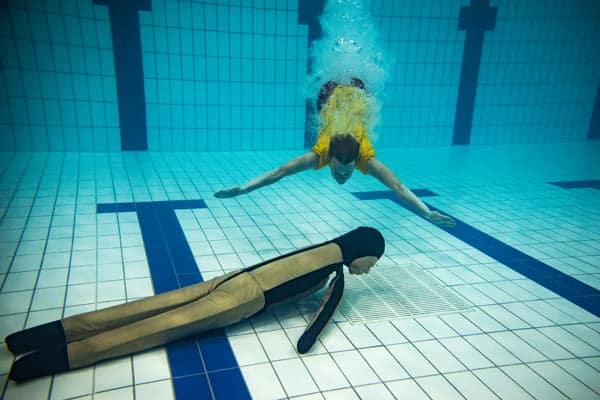
Pool detection systems – sometimes referred to as drowning detection systems or automated pool monitoring systems – use advanced camera technology, artificial intelligence and computer vision to monitor swimming pools continuously. These systems are designed to identify swimmers who may be in distress, such as those who are motionless or submerged for longer than expected, and raise an alert so lifeguards can respond quickly.
Rather than replacing lifeguards, pool detection systems act as an additional layer of safety, supporting human supervision in busy, complex or challenging pool environments. They are increasingly used in public swimming pools, leisure centres, hotels, schools and aquatic facilities across the UK, Europe and internationally.
Why Pool Detection Systems Are Used in Swimming Pools
Lifeguarding requires constant vigilance, often across large pool areas with varying depths, blind spots, surface glare and high bather loads. Pool detection systems help address these challenges by:
- Providing continuous underwater and/or overhead monitoring
- Identifying potential incidents that may not be immediately visible from poolside
- Highlighting the exact location of a potential casualty
- Supporting faster decision-making and response times
- Helping operators strengthen their overall pool safety strategy
For pool operators, these systems can also provide reassurance that additional measures are in place to help manage risk and improve swimmer safety.
Pool Safety and UK Health & Safety Guidance (HSG179)
In the UK, swimming pool operators are expected to manage risk in line with the Health and Safety Executive (HSE) guidance: Health and Safety in Swimming Pools (HSG179).
HSG179 sets out best practice for:
- Pool supervision and lifeguard provision
- Risk assessment and normal operating procedures
- Emergency planning and rescue arrangements
- Equipment inspection, testing and maintenance
While HSG179 does not mandate the use of specific technologies, it is clear that operators must take reasonably practicable steps to ensure swimmer safety. Pool detection systems may form part of this broader, risk-based approach, provided they complement – not replace – trained lifeguards and robust operating procedures.
Importantly, HSG179 emphasises the need for safety systems and equipment to be properly tested, maintained and proven to work as intended – which is where realistic testing methods become essential.
Pool Detection Systems in Use Across the UK & Europe
A number of pool detection systems are currently in use across the UK and Europe. These systems vary in approach but share a common goal: supporting lifeguards and improving safety outcomes.
Systems we have worked alongside include:
- AngelEye – combining underwater and above-water cameras with intelligent alerting
- Poseidon – using computer vision to detect motionless or submerged swimmers
- PoolView – employing underwater imaging and analytics for early incident detection
- Lynxight – an AI-driven lifeguard assistance system analysing swimmer behaviour from above the water
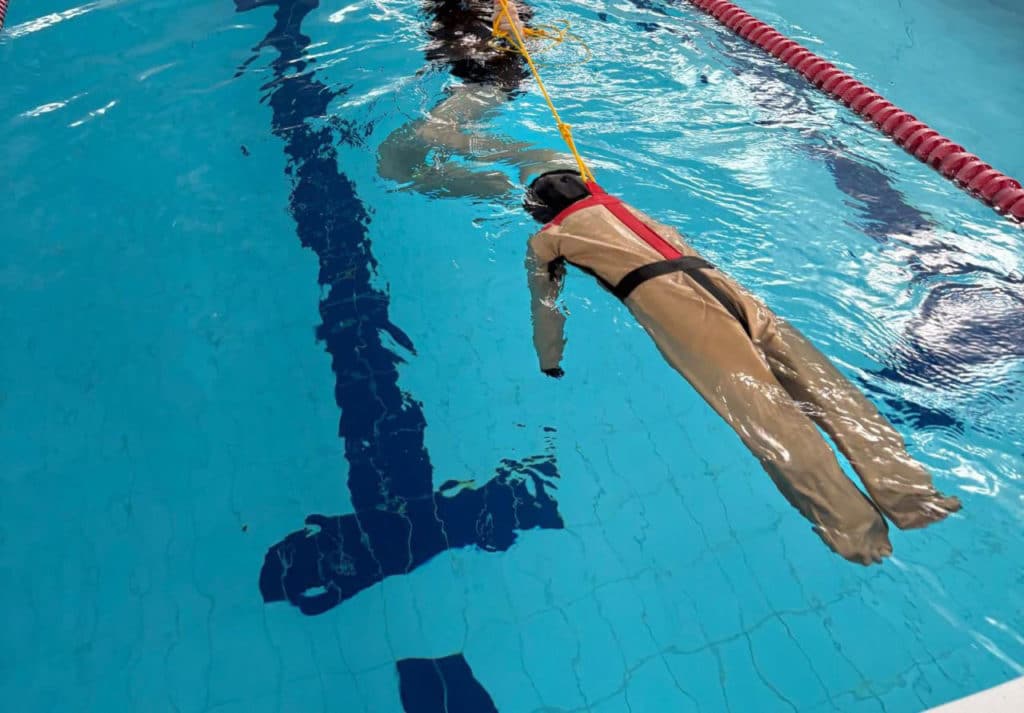
Some of these systems, including Lynxight, include a Ruth Lee Pool Rescue Manikin as part of their package for testing, calibration and demonstration purposes.
International Standards and Detection System Testing (ISO 20380)
At an international level, ISO 20380:2017 – Public swimming pools – Computer vision systems for the detection of drowning accidents – defines safety requirements and test methods for detection systems used in public swimming pools.
The standard focuses on:
- Performance expectations
- Detection reliability
- Structured testing in realistic pool conditions
Although ISO 20380 does not explicitly state that a manikin must be used, the test methods it describes require repeatable, controlled simulations of submerged human bodies. As a result, realistic pool rescue manikins are widely recognised as the most effective tool for validating system performance during commissioning, calibration and ongoing checks.
As detection technology continues to evolve, standards such as ISO 20380 are regularly reviewed, and there is increasing emphasis on consistent, real-world testing methodologies.
Looking Ahead: Emerging Guidance for Detection System Testing
As of June 2026, industry stakeholders are actively working on updated guidance relating to the testing, validation and performance assessment of pool detection systems. While details have not yet been formally published, the aim is to provide greater consistency in how these technologies are evaluated and deployed across aquatic environments.
Further announcements are expected in the coming months, and operators, manufacturers and training providers alike will be watching developments closely. As the guidance becomes available, this article will be updated to reflect any new recommendations and industry best practice.
Why Manikins Are Essential for Testing and Calibration
To function correctly, pool detection systems must be set up, tested and calibrated under realistic conditions. Ruth Lee Pool Rescue Manikins are ideally suited to this role because they:
- Accurately replicate the size, weight and behaviour of a human body underwater
- Provide a consistent, repeatable test subject for system validation
- Allow manufacturers and operators to confirm detection performance across different pool depths and layouts
- Support commissioning, routine testing and staff familiarisation
To further support this process, Ruth Lee offers an optional overall with integrated tow points, making it easier to move the manikin across the pool floor during calibration. This allows controlled positioning and movement during testing without compromising realism, and without the need for someone to get into the water themselves.
Once testing is complete, the overall can be removed and the same manikin used for lifeguard rescue training, maximising value and ensuring the equipment supports both technology and people.
Supporting Lifeguards, Not Replacing Them
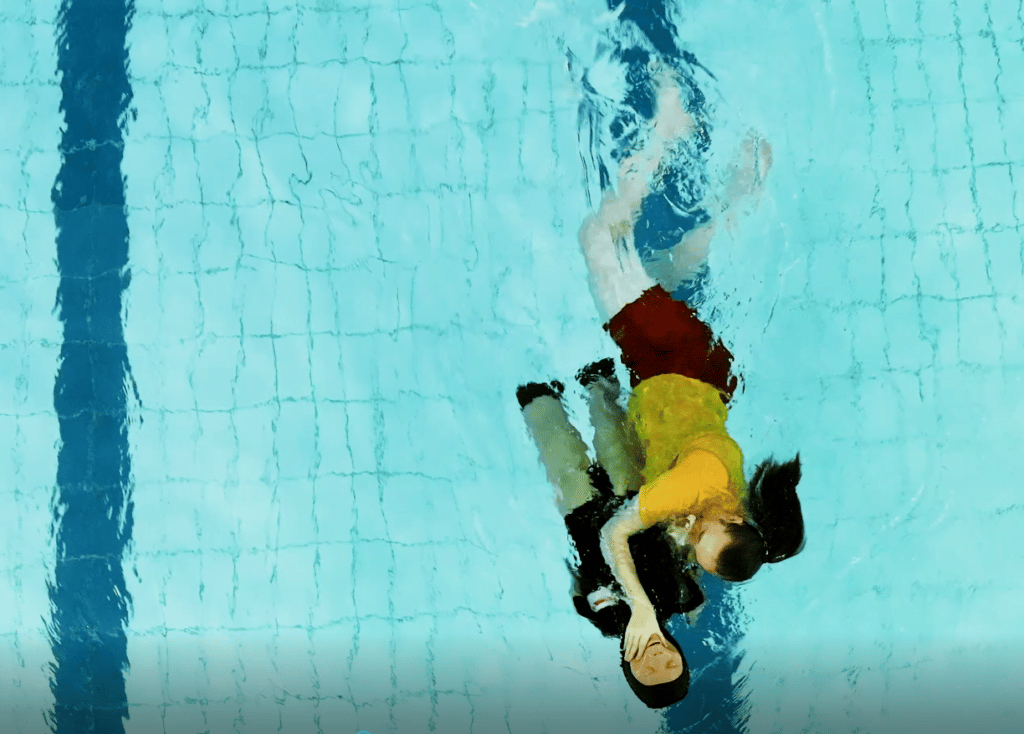
Both UK guidance (HSG179) and industry best practice are clear: technology should support lifeguards, not replace them. Pool detection systems can enhance awareness and response, but effective pool safety still relies on:
- Properly trained lifeguards
- Clear emergency action plans
- Regular drills and realistic training
- Reliable, well-maintained equipment
Using a single manikin for both system testing and lifeguard training helps reinforce this joined-up approach to safety.
A Smarter, Layered Approach to Pool Safety
Pool detection systems, when combined with trained staff, realistic testing and robust operating procedures, can play a valuable role in improving swimming pool safety. By supporting accurate system calibration and validation, Ruth Lee Pool Rescue Manikins help ensure that detection technology performs as expected when it matters most.
As pool safety technology continues to develop in the UK, Europe and internationally, realistic testing and training will remain essential to delivering safer aquatic environments for everyone.